Define the routine
The team starts with the daily moment: bottle cleaning, independent sipping, stroller travel, first movement play or a plush comfort gift. That routine determines which details are useful and which are just decorative noise.
Munchkin services are organized for buyers who need to explain product choice with discipline. The work covers category review, age-stage positioning, material language, packaging notes and the evidence parents expect before trusting feeding or play products.
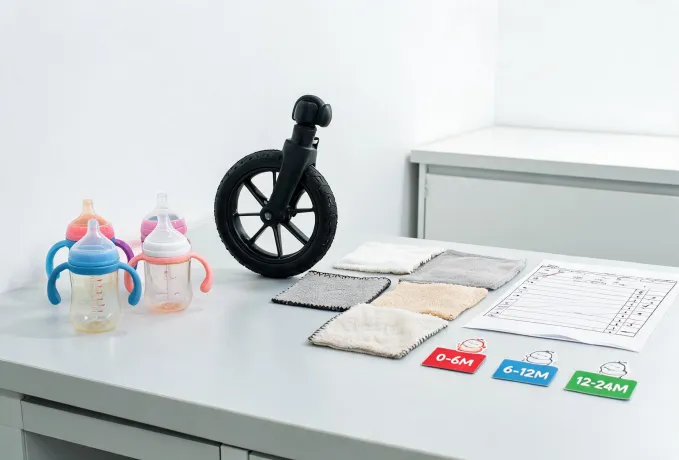
The service model does not treat a sippy cup, a ride-on toy and a plush character as the same kind of product. Each has a different parent concern, cleaning pattern, supervision context and documentation need.
| Capability | What is checked | Output for buyers |
|---|---|---|
| Age-stage mapping | Infant, toddler, preschool and gift-use context are separated before content is written. | Clear collection language that avoids over-broad age claims. |
| Material review | Food-contact silicone, BPA-free plastic, plush textile and ride-on frame details are described with practical care notes. | Parent-facing copy that connects material choices to cleaning and use. |
| Safety alignment | ASTM F963, CPSIA, EN71 and small-parts language are matched to the category where they are relevant. | Compliance vocabulary that supports retail pages without turning them into certificate walls. |
| Merchandising clarity | Feeding, travel, diaper care, plush comfort and movement items receive separate comparison hooks. | Navigation, product group titles and CTA language parents can scan quickly. |
The team starts with the daily moment: bottle cleaning, independent sipping, stroller travel, first movement play or a plush comfort gift. That routine determines which details are useful and which are just decorative noise.
Age guidance is written as a decision tool rather than a broad promise. Infant products emphasize caregiver control and sanitation, toddler items stress grip and durability, while preschool play adds coordination and supervised independence.
Standards and material claims are placed where they help the buyer understand risk. The goal is plain-language support for ASTM, CPSIA, EN71, BPA-free and non-toxic claims without stuffing every page with the same compliance sentence.
The last step converts technical notes into category tiles, comparison tables, product descriptions and short CTAs. Parents get a practical reason to choose, and retail teams get language that is easier to maintain across collections.
Share the product family, age stage and safety question you want clarified before merchandising or buying decisions.
Request a Service Review