Age-grade confirmation
Copy should separate infant, toddler, preschool and gift contexts because the same product benefit can mean different things at each stage.
This page translates product safety expectations into shopper-ready guidance. It uses the compact header, structured table, checklist and single CTA structure from the assigned compliance layout, but the content stays focused on child product standards and material clarity.
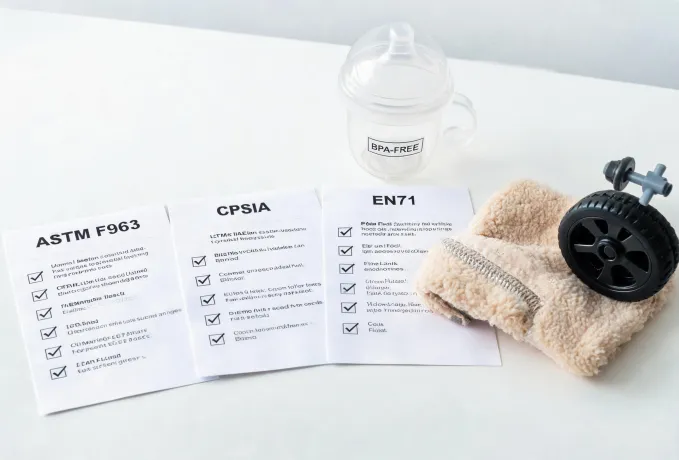
A parent does not need a wall of unexplained acronyms. Munchkin presents standards and material notes beside the use moment they support, so a feeding cup, ride-on item or plush toy can be understood in plain language.
| Standard or claim | Product relevance | How it should read on the page |
|---|---|---|
| ASTM F963 | Toy safety language for mechanical hazards, small-parts awareness and foreseeable play. | Use with ride-on and plush content where physical play, seams, parts or supervision cues matter. |
| CPSIA | Children product compliance expectations including labeling, traceability and restricted substances. | Place near safety summaries and buyer support pages, not as a decorative badge without context. |
| EN71 | International toy safety reference for markets that compare EU-oriented product claims. | Explain as a standards reference when assortments are compared for global retail readiness. |
| BPA-free | Especially relevant to baby feeding, care and mouth-contact products. | Connect the claim to materials, cleaning and food-contact use instead of leaving it as a loose label. |
| Non-toxic finishes | Useful for plush details, painted surfaces and products children may handle repeatedly. | Pair with age grading, care instructions and warning language appropriate to the category. |
Copy should separate infant, toddler, preschool and gift contexts because the same product benefit can mean different things at each stage.
Food-grade silicone, BPA-free plastic, plush textiles and molded ride-on parts should be named only where they help a buyer understand product use.
Safety notes need to reflect foreseeable handling, mouthing behavior and the difference between caregiver-controlled care items and independent play products.
Feeding and diaper care pages should make cleaning effort clear because a safe material story is weakened if the maintenance routine is confusing.
Ride-on toys and early movement products need plain supervision cues that parents can act on during indoor and outdoor play.
Claims should support product comparison, parent education and customer service answers without turning every page into a dense compliance document.
Send the product family and market context so the standards language can be matched to real parent questions.
Review Safety Language